
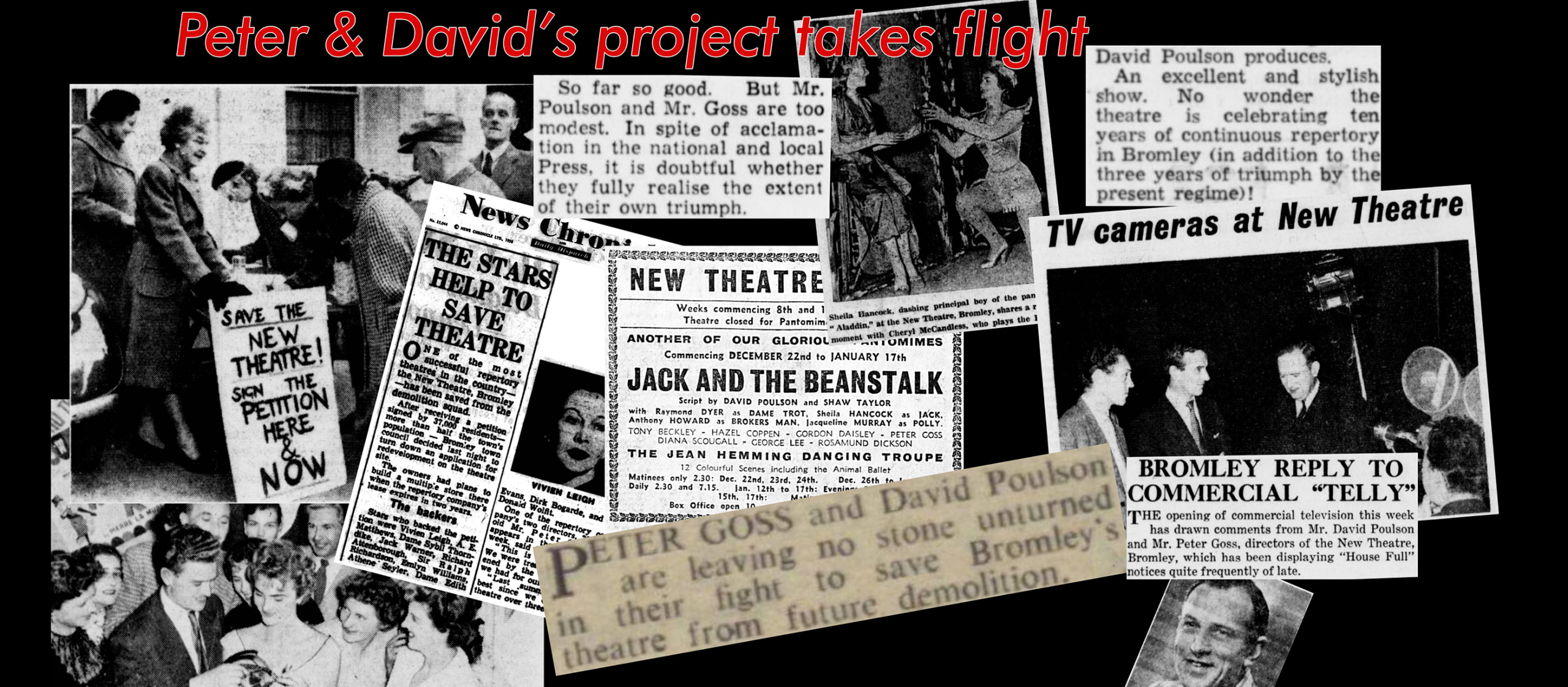
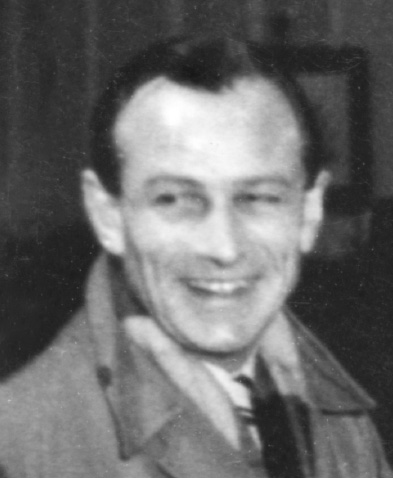
I knew a bit about my godfather (Peter Goss) and Dad (David Poulson) running the New Theatre, Bromley, and had previously posted about them taking over the lease in late 1954. I recently combed through old newspapers to better understand their first few years trying to win back audiences, build a repertory company and balance the books. I came away impressed – gobsmacked – at how much they did, at a time so many provincial repertory theatres were struggling.
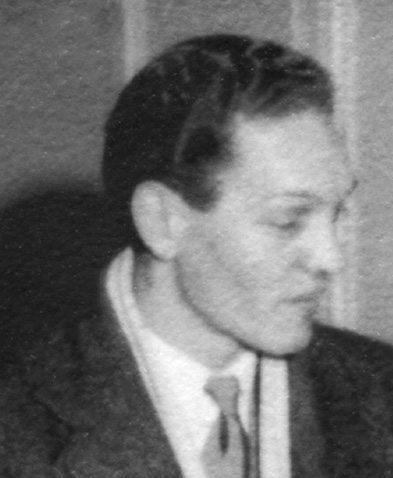
Commercial television began in 1955 compounding worries about the impact of films and BBC television on keeping live theatre outside of London’s West End financially viable. According to an interview Peter gave to a local paper in 1961, he and Dad had worked out what they could afford for rent if they were to cover their costs for quality productions and told Rank (the landlord) their rate was too high – then offered them half what they were asking! Peter’s view was “This is not just our theatre, it’s Bromley’s theatre”
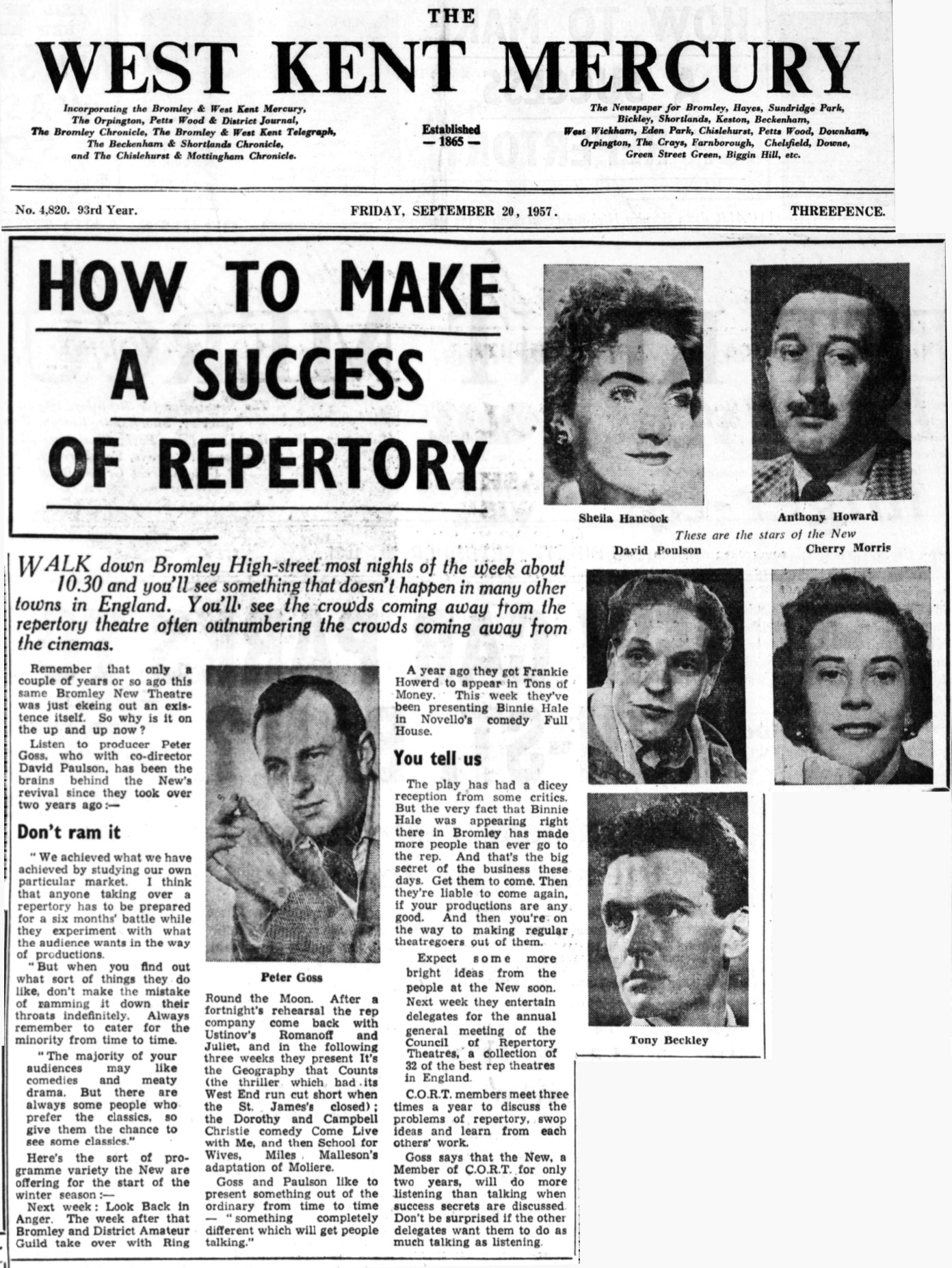
Two and a half years after they opened, a local paper covered their work in a story headlined: “HOW TO MAKE A SUCESS OF REPERTORY” – crowds coming out of the repertory company outnumbering those from the cinema.
It wasn’t just local newspapers. A December 1957 headline in The Stage boasted “ANOTHER SUCCESSFUL SEASON AT BROMLEY” noting their successful (artistic and financial) season, mentioning favorite performances and adding “David Poulson, as producer, has led the company throughout with a sure touch and a great attention to detail.” The traditional pantomime that Christmas, which Dad wrote as well as produced (Dick Whittington) played to “packed houses” and was fully a children’s, traditional panto – audience participation, Good Fairy vs. King Rat, Principal Boy and Girl, and comedy, songs, dancing plus lots of action. Truly a family event.
Local newspaper stories also covered many ways Peter and Dad worked hard to involve the community and build a sense of ownership of a local theatre, work that paid dividends when the theatre was threatened with demolition in Autumn 1958.
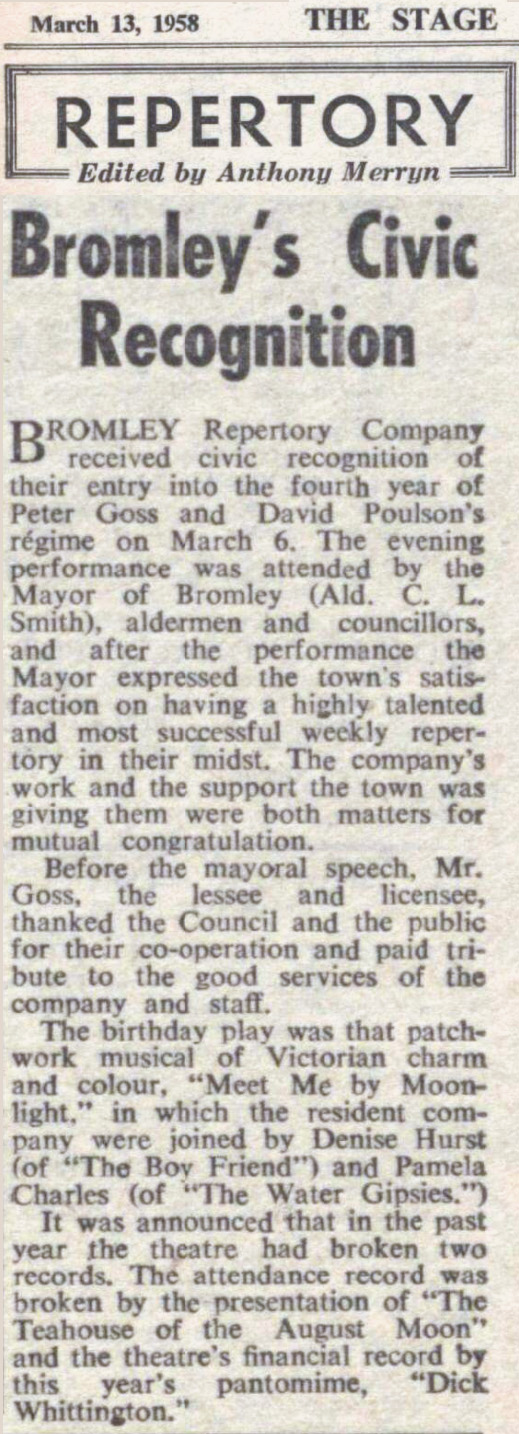
On their third birthday in March 1958, Richard Attenborough agreed to be a Patron and Peter told The Stage Teahouse of the August Moon had broken all theatre records. The Bromley Mayor and councillors attended a birthday performance and in a speech afterwards praised the “highly talented and most successful weekly repertory” noting the support the town was giving them. Comedian Frankie Howerd opened the Third Annual Theatrical Garden Party (a fund raiser and community engagement event) in August. The Stage had said of them “These young directors whose energies have made repertory history . . .” 1958 was shaping up very nicely for The New Theatre Bromley.
In early October a local paper page one headline screamed “DEMOLITION THREAT TO THEATRE”. The newspaper story quoted Dad: “lt would he a crime for this town to lose its only live theatre…”. Peter was on holiday, but Dad told the paper public opinion and the council of repertory theatres would be their primary weapons in fighting this threat. “I cannot believe that the town will let it founder without a protest.” He urged playgoers to write to the council. The town said they hadn’t yet received a formal planning request for the theatre site and so had no comment. Peter & Dad’s fight was a 1950s version of a social media campaign!
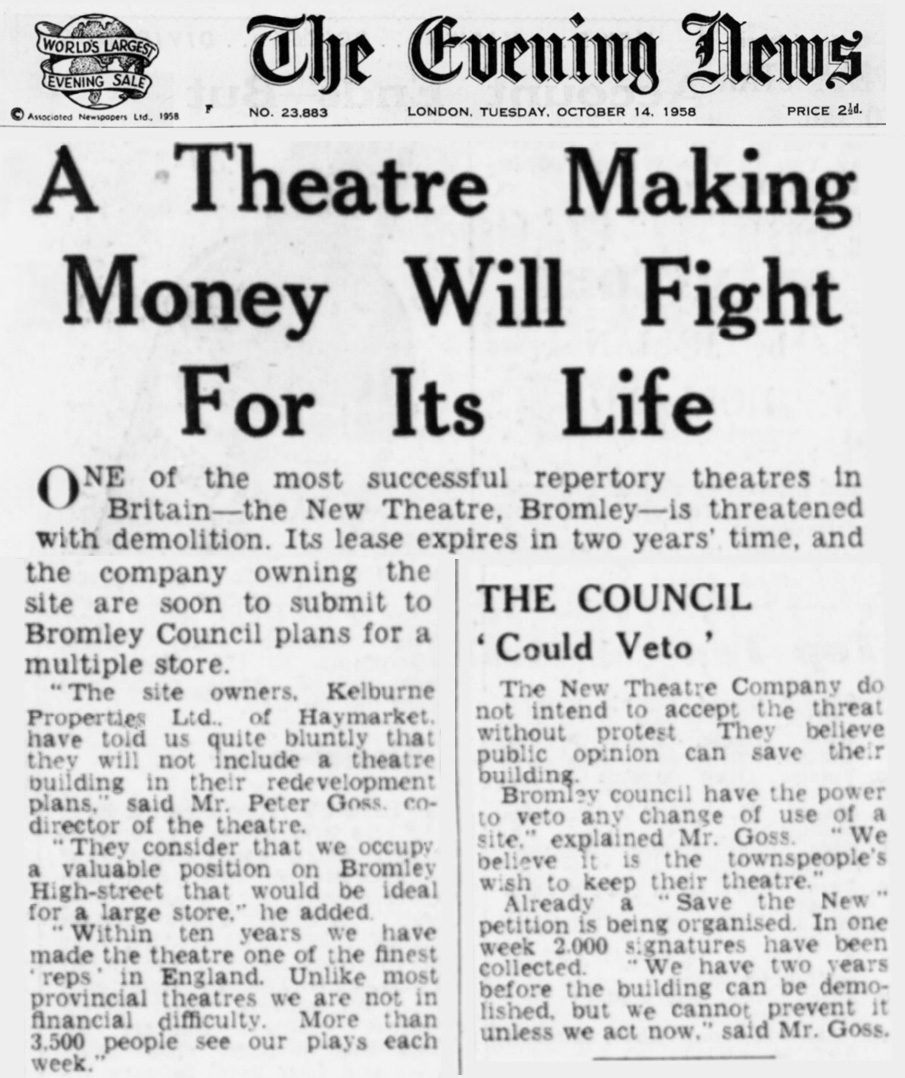
Three years of work to include school groups, the Theatre Club (they got special pricing once a week and met cast members; actors attended their dances), talks to social organizations and colleges about the theatre, various discounts (seniors, youth, club members) now reaped huge dividends. There were lots of people in Bromley who were in some way invested in weekly rep, not only theatre people, who were especially concerned after a recent failed campaign to save London’s St. James Theatre (demolished at the end of 1957).
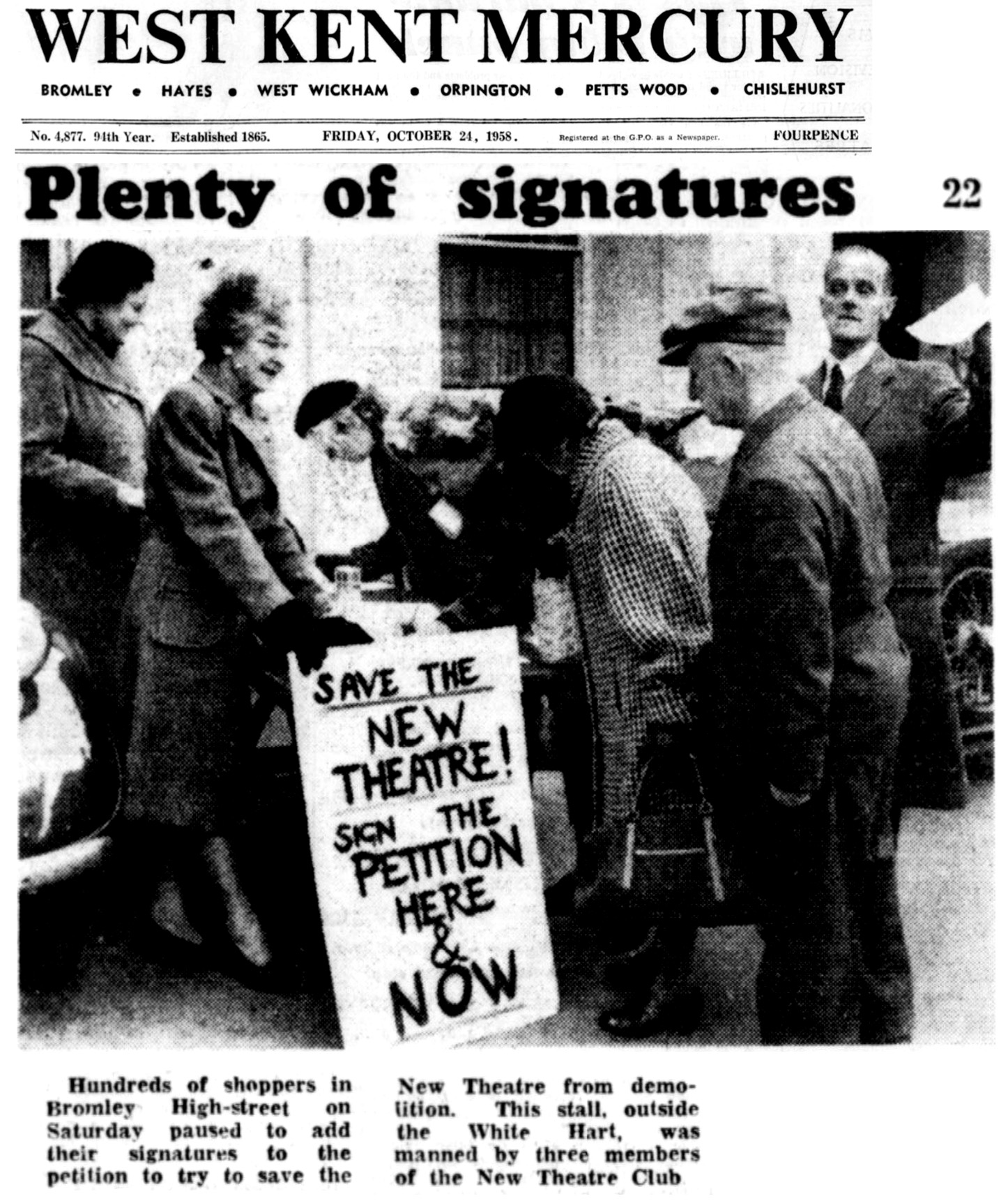
Peter & Dad’s approach was to convince the Bromley Borough Council to deny the owners planning permission for their new use of the land. As lessees (subletting from the Rank Organization) they had no direct control over the building they depended on. They also pointed out their solid financial footing – profits each year with no Arts Council funding or local council support. On October 10, Peter told a local paper “Mr. Poulson and I are going to London tomorrow (Thursday) for talks with the Council of Repertory Theatres and with the newly-formed National Council for Theatre Preservation.” Signatures were being added in the New Theatre entrance, at the newspaper office and the town hall said they’d received 25 letters so far. Vivien Leigh threw her weight into the campaign, writing to the council: “…Do please use your influence to save it. Every flourishing theatre such as this should be helped to survive…”
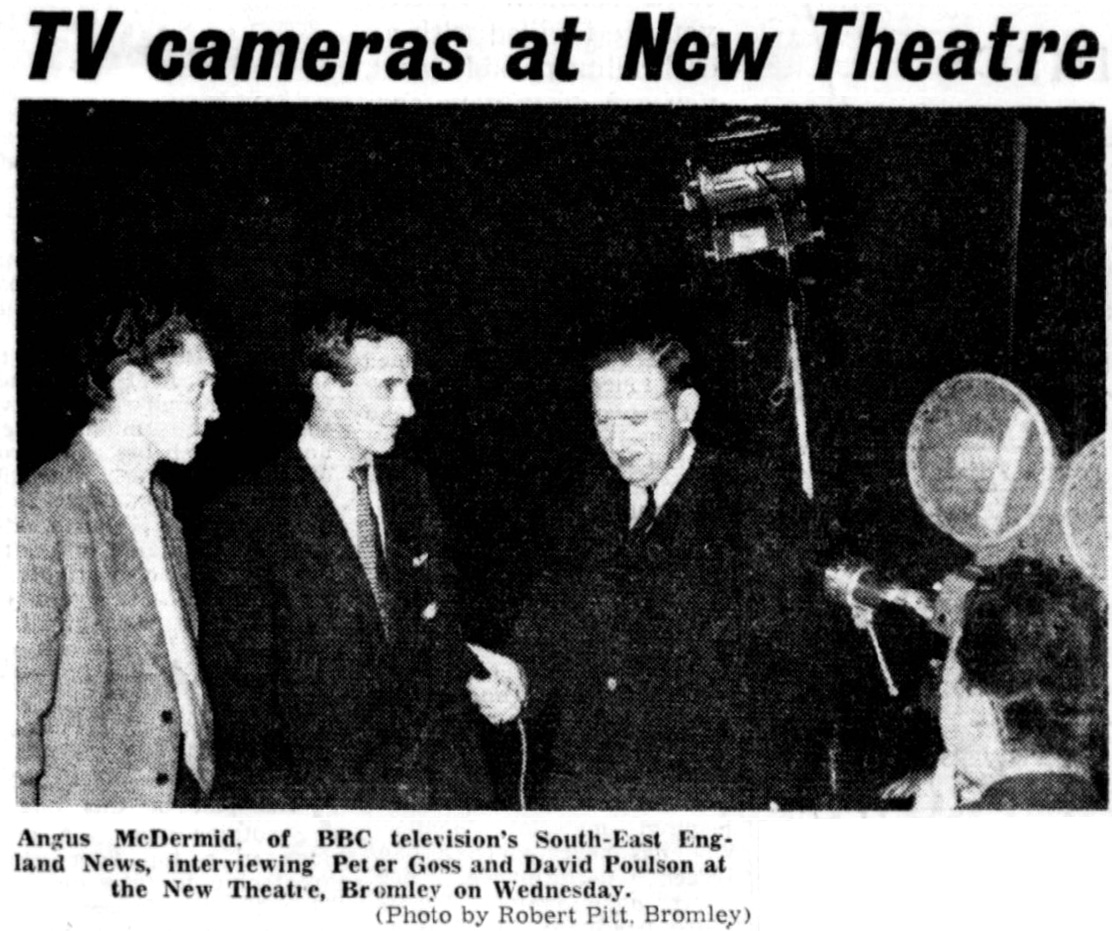
By the time the BBC interviewed Peter & Dad on October 24th, the signature count on the petition was up to 20,000 and theatre heavyweights such as Ralph Richardson, Edith Evans and Sybil Thorndyke were among those who wrote to the town clerk. “…like an extract from a theatrical Who’s Who.” according to a local newspaper. Actor AE Matthews wrote: “I have played from Lands End to Aberdeen, and we have enough fish shops with uneatable fish and steak shops with meat no-one can afford to buy, without tearing down this lovely theatre that is doing so well.”
In the end, the petition to save the theatre gathered nearly 40,000 signatures (various reports range from 37,900 to 42,000) which was more than half the population of the borough in 1958! In November, the council voted unanimously to reject the application for new shops on that site (and a request to delay the decision for a month). The developer could appeal, but apparently didn’t and some time in the early 1960s the council acquired the property.
One problem solved, but the challenge of keeping a provincial theatre thriving hadn’t become any easier. For example, in 1961 they were offered £5,000 to host bingo on Sundays – Peter said that sort of money would be like manna from heaven for a repertory company, but they ended up saying no after surveying patrons for their views. I’m sure their earlier experience of playgoers’ support informed the consultation.
However, the building they’d saved from demolition was old, leaky, too small (among other issues), so the next project was to work with Bromley Council to get a new theatre built in Bromley High Street. It did get built, eventually, and the Churchill Theatre is still operating in Bromley (although it was sold in 2025; queue more Bromley Council squabbling) but the transition from the New Theatre to the Churchill is a long story for another blog post.