My stepmother Margo’s Mum was affectionately known as “Batty Nan” by her grandsons (Tony & Mike). Rose Fitzgerald Meredith had a colorful family on her mother’s side, but until a week or so ago, I didn’t know much about the colorful characters on her father’s side of the family.
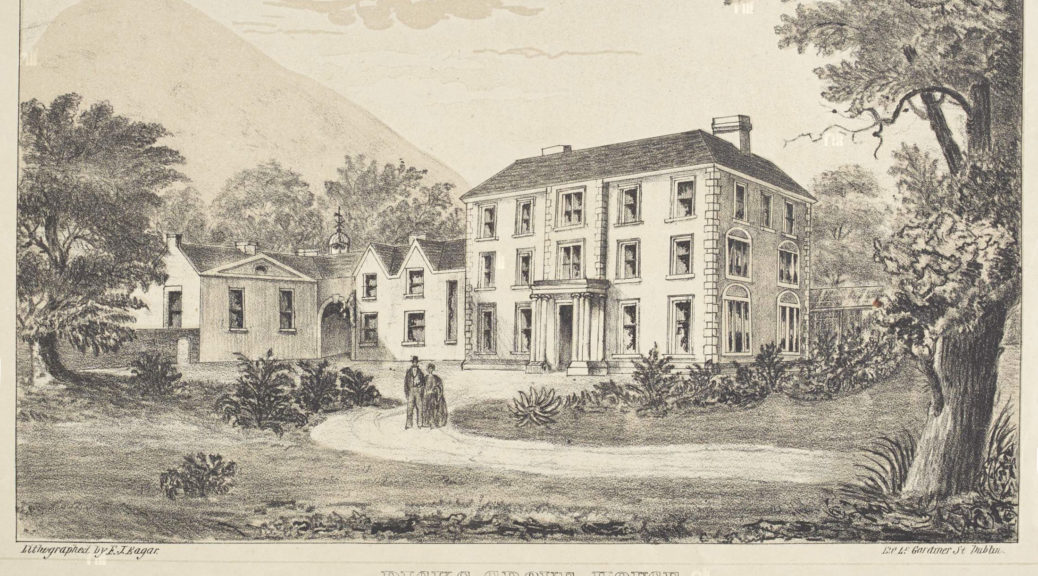
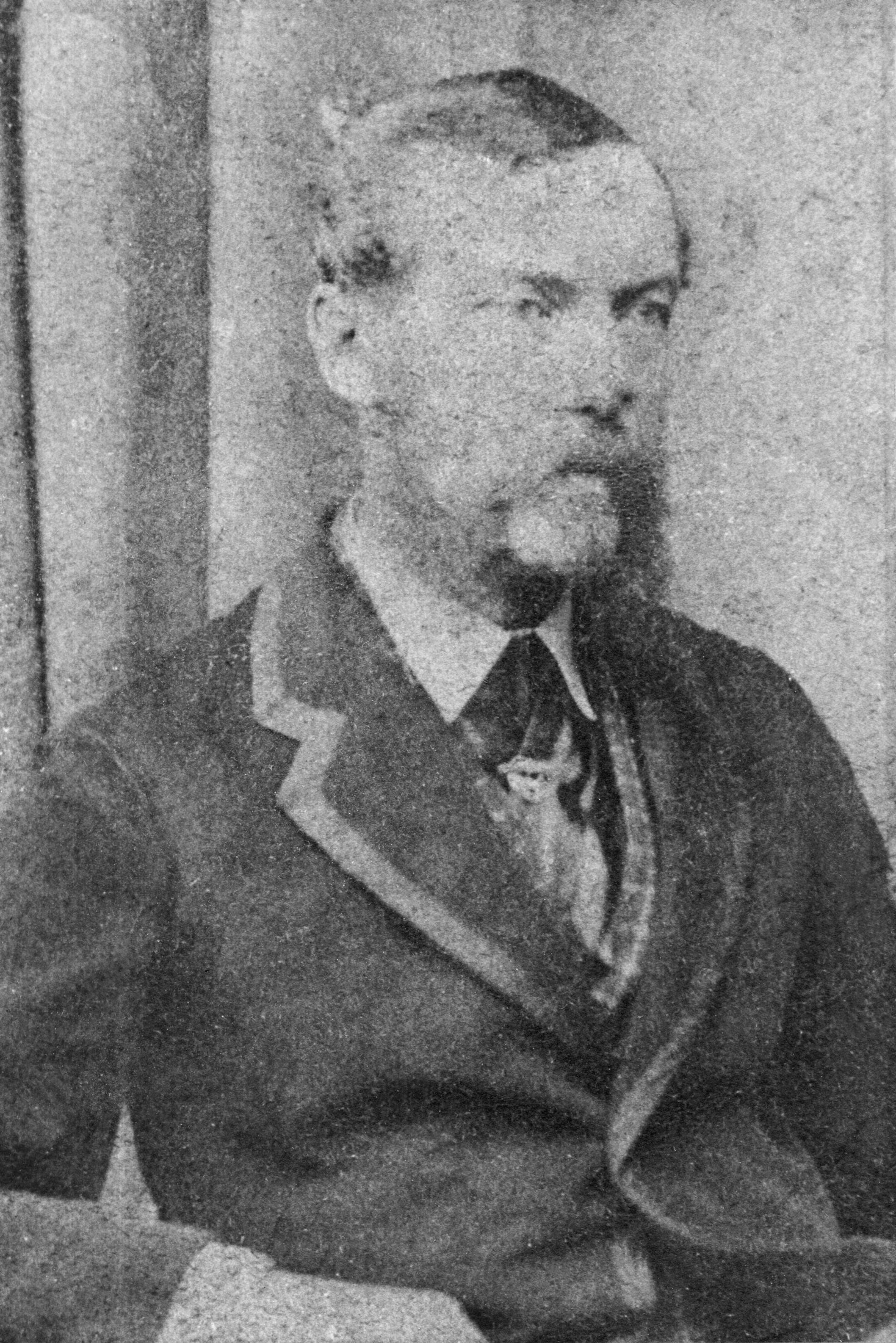
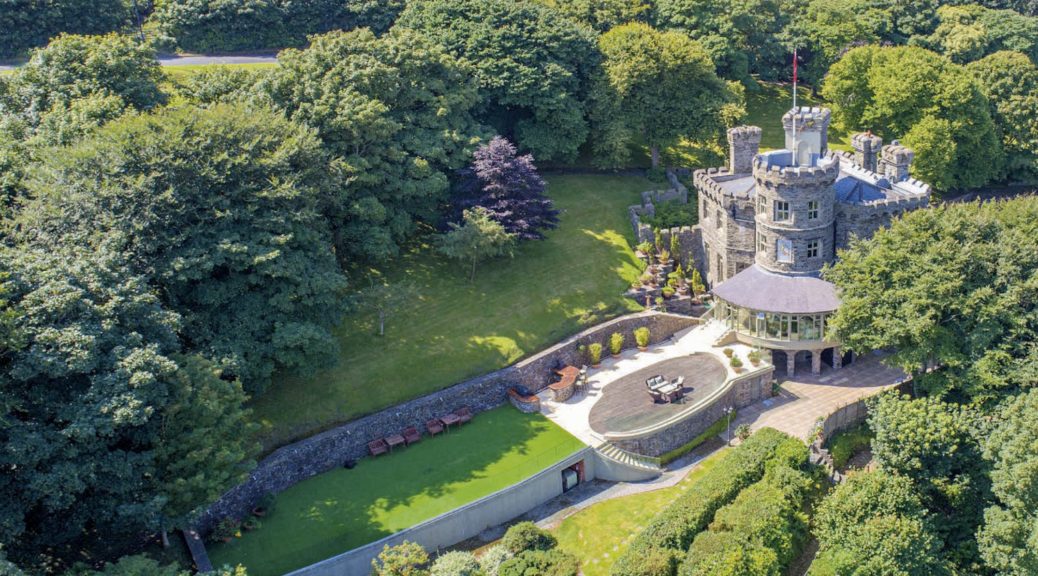
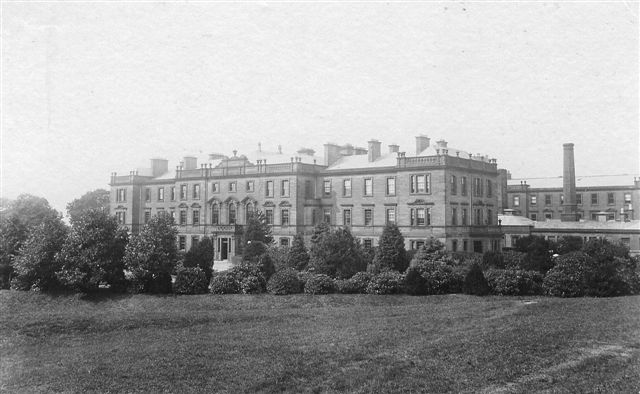
Richard Standish D’Ouseley, my stepmother Margo’s great-grandfather, was Collector of Customs in Douglas, Isle of Man, from 1861 to 1872. A prominent citizen in Douglas, Thomas Wilson, who had made his name and apparently a lot of money as a draper with several locations, was reportedly related to Richard D’Ouseley. From around 1860, Thomas Wilson and his family lived in Harold Tower, the 1833 “folly” pictured above. He leased it, presumably when he retired as a draper (in the 1861 census he is a “Retired Merchant” and doing rather well at age 55). For a few months in 1871, Thomas Wilson lived at the Crichton Royal Institution, Dumfries, a lunatic asylum, in a truly bizarre set of circumstances.
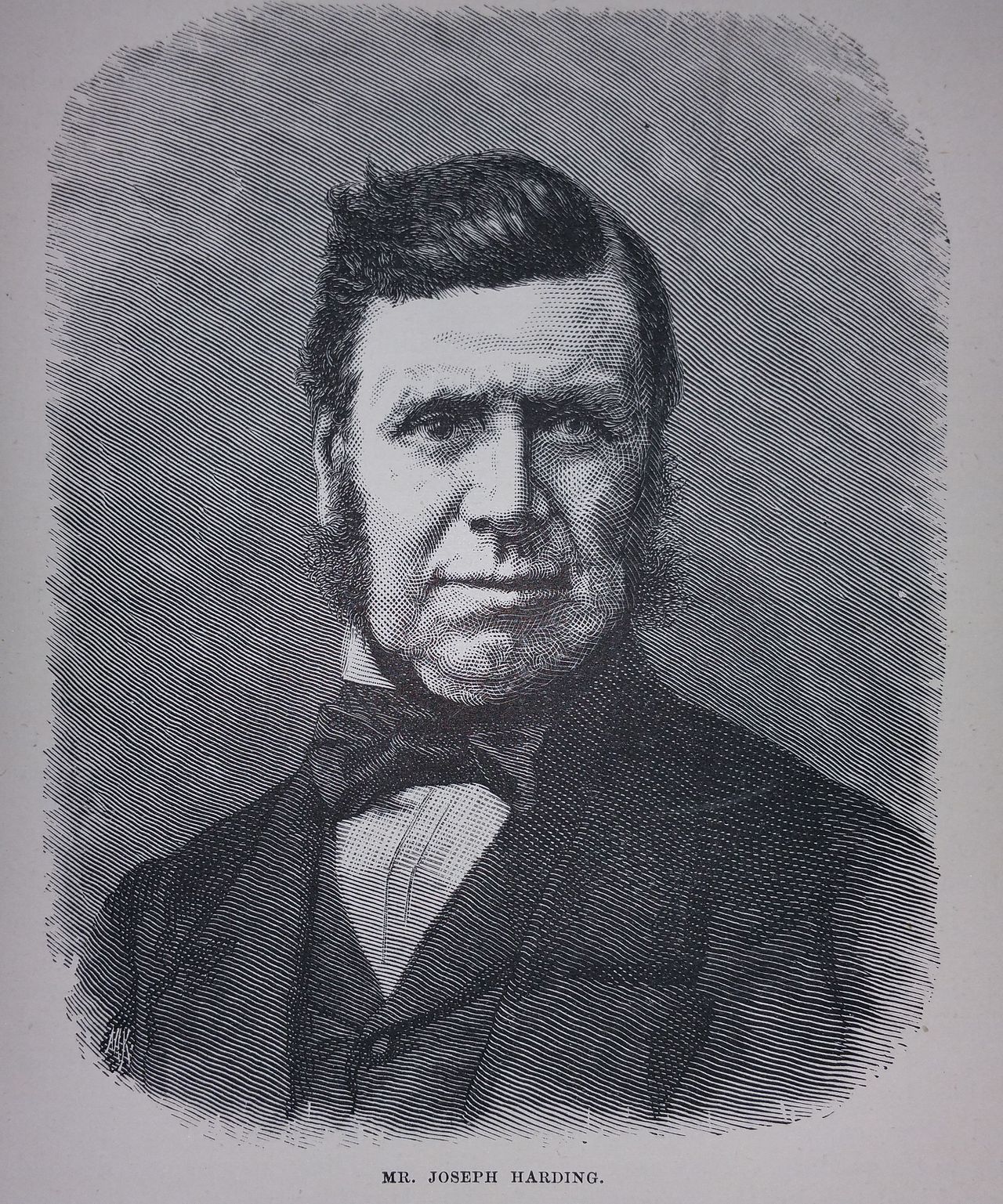
“l am satisfied that whether we make cheese at Dalgig among the mountains, at Cunning Park amongst forced grass, or among heather at Corwan, where Mr. Wason is making the desert to blossom as the rose, there is no difference whatever. My opinion is that good cheese can by good management be made anywhere, whether at the Land’s End or Caithness, if it be in the hands of a person who has something in the upper story.” Joseph Harding addressing the Ayrshire Agricultural Society in 1861. Having learned a lot about making great cheese and having tested his theories by teaching Scots farmers how to get equally great results, Joseph Harding’s views were now sought out.
It was no small incentive to his first fans, Scots farmers, that his cheese fetched £80 per cwt versus theirs only £50. Time for a field trip to see if they could improve. In 1854 an article in The Scotsman noted “In no department of farm management is the Scottish farmer so decidedly behind his English neighbour as in the manufacture of cheese.” Continue reading The Cheddar method of Joseph Harding→
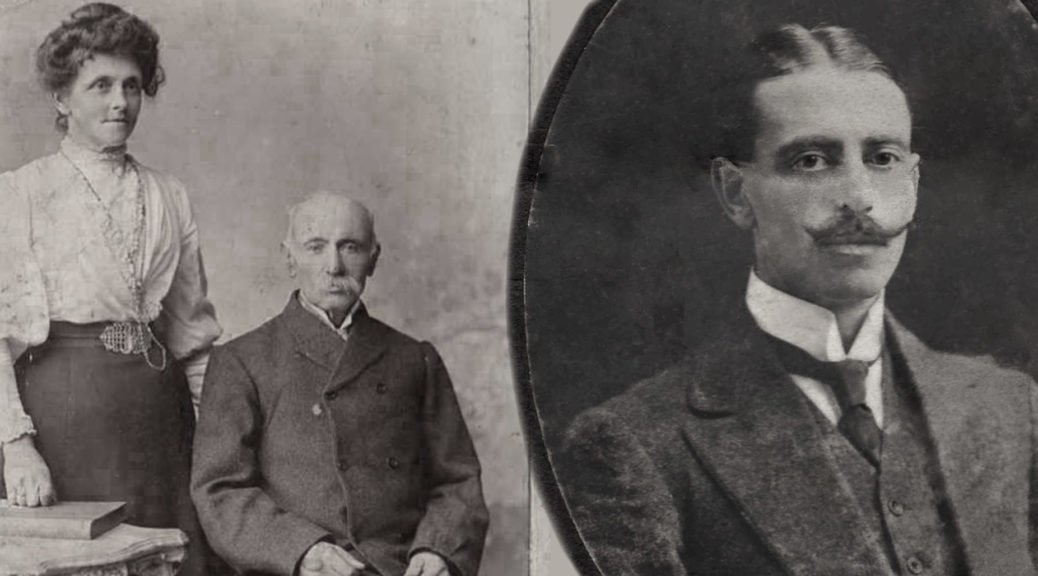
My connection with the Beacon family is limited – my great aunt Maisie was briefly married to Cedric Alfred Beacon (1914-1922). Cedric and his father – Alfred Beacon, or Amos Beacon, or Dr. A. Beacon, or the “Rev. A. A. Beacon, Ph. D., M.A., etc.” are a puzzling and colorful pair, and I wanted to try and put together their story – or at least an outline of it. I believe that some part of their series of unusual transformations is upheaval that was going on in England at the time – a transformation in how children were educated in Alfred’s case and World War I and its aftermath in Cedric’s.
Cedric’s father Amos leaves you scratching your head. If census records are accurate (and this is all self-reported data, so it’s not always correct), a man who was a schoolmaster and for a while ran his own schools, in later life became a farmer, a green grocer and a timekeeper for a tram car company! How did that transition happen? Continue reading Beacon: Amos or Alfred, Charles or Cedric, teacher or tram inspector…→
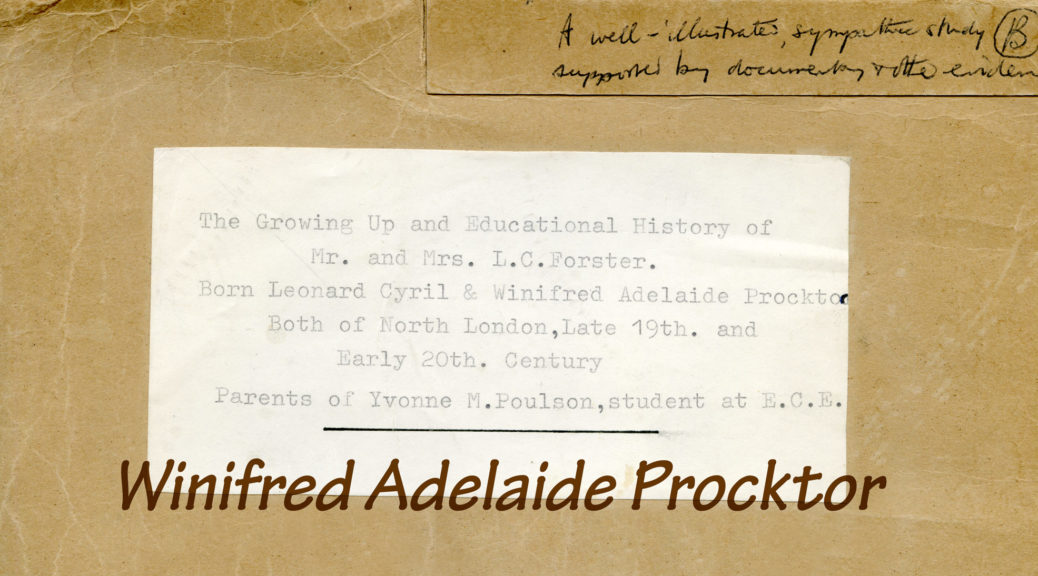
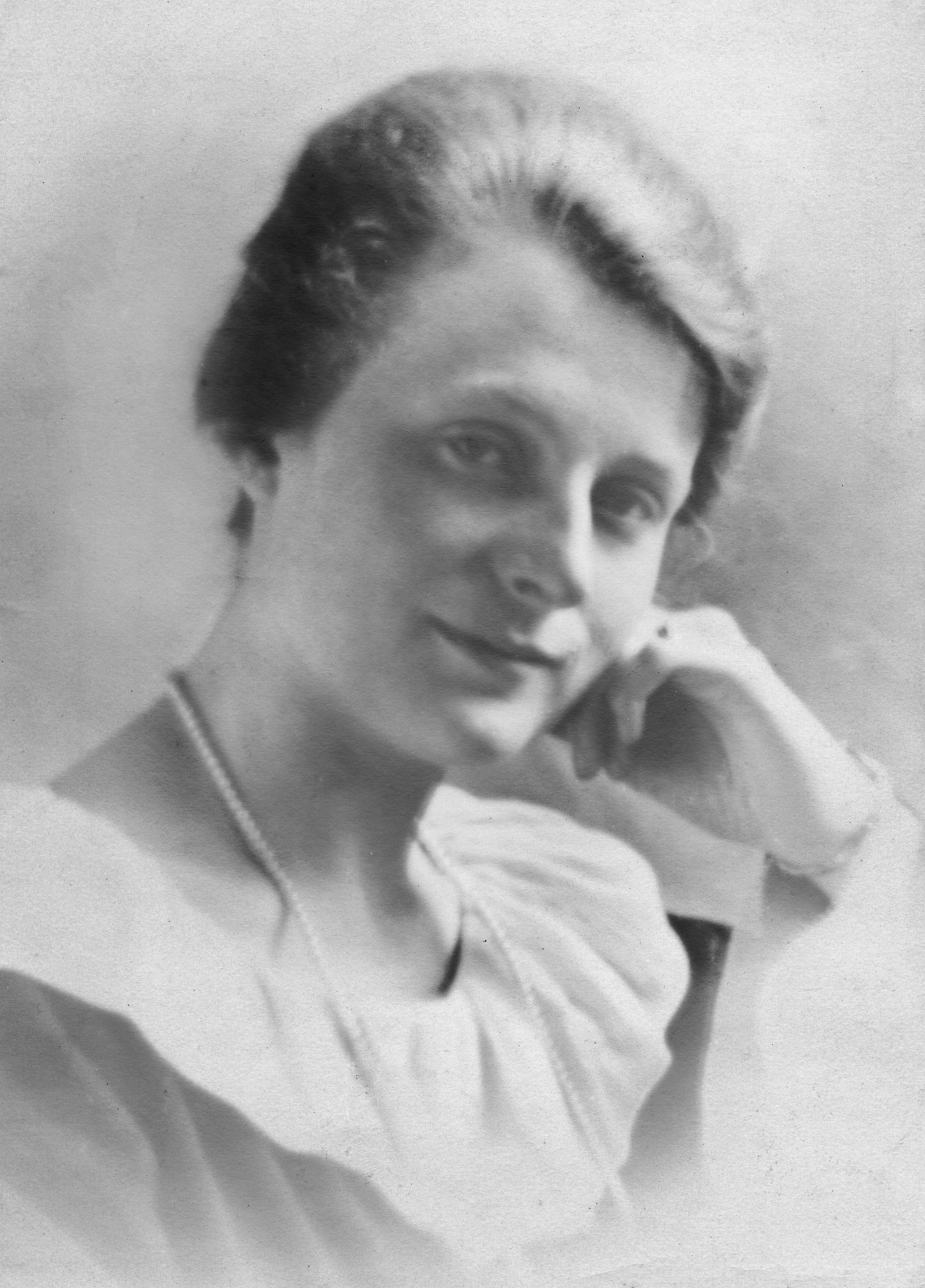
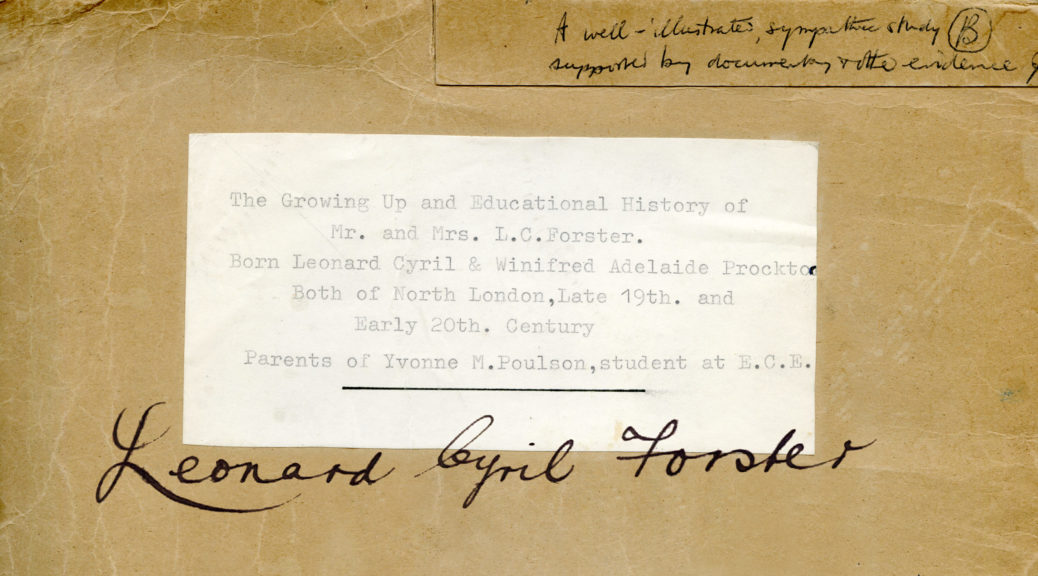
I provided an overview of my mother’s social history of her parents for teacher training college in a separate post. This is the detail section for her mother, Winifred Adelaide Procktor. I scanned and converted into text (production note: OCR software is still sadly an almost-success where fixing up errors almost negates the time saved) to improve readability, but the spellings (English versus US) and rather odd sentence structure – more like notes than an essay – I left intact. You’re seeing what my mother turned in – it surprised me to see such ragged work, but possibly she was pushed for time given other coursework.
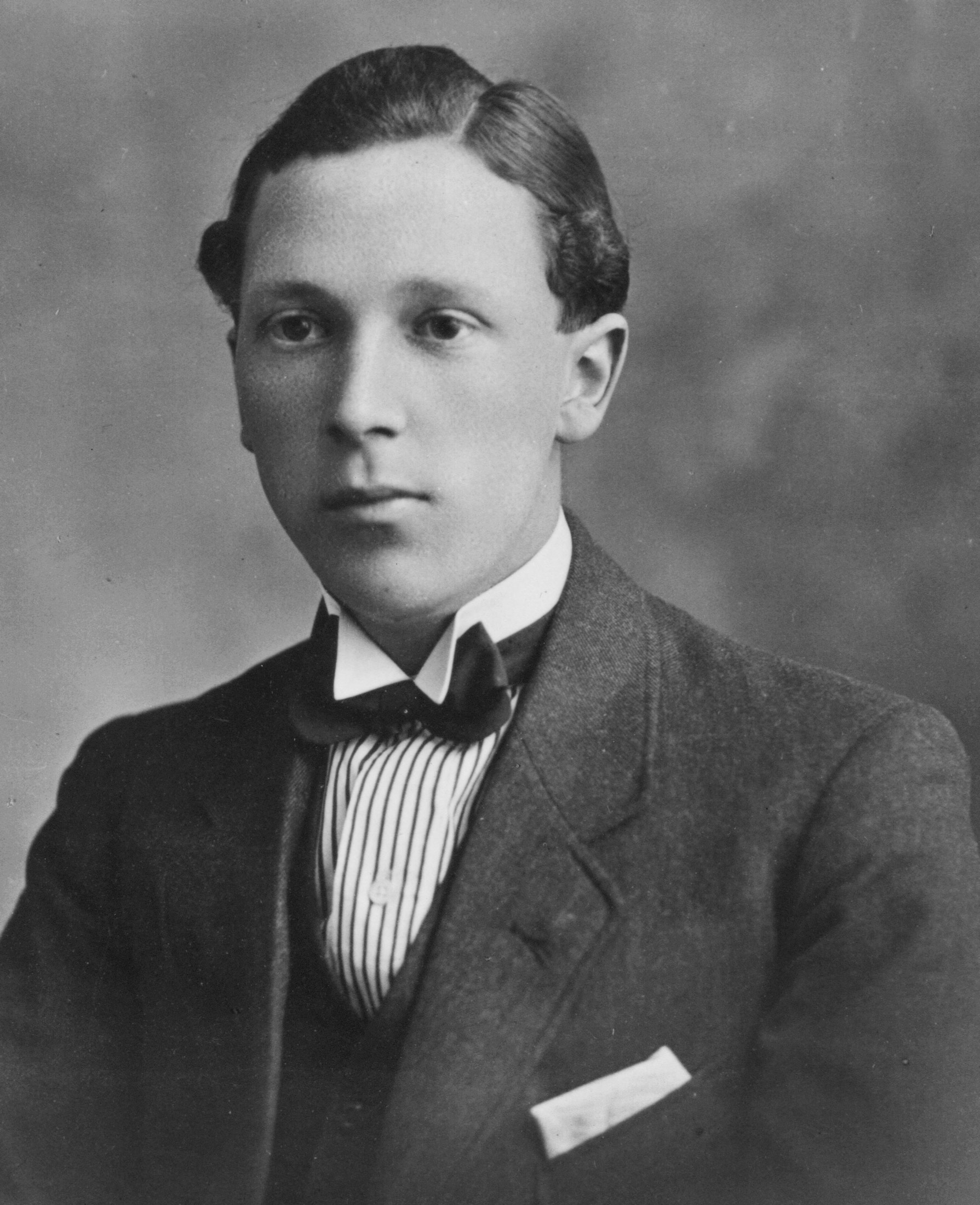
I provided an overview of my mother’s social history of her parents for teacher training college in a separate post. This is the detail section for her father, Leonard Cyril Forster. I scanned and converted into text (production note: OCR software is still sadly an almost-success where fixing up errors almost negates the time saved) to improve readability, but the spellings (English versus US) and rather odd sentence structure – more like notes than an essay – I left intact. You’re seeing what my mother turned in – it surprised me to see such ragged work, but possibly she was pushed for time given other coursework.
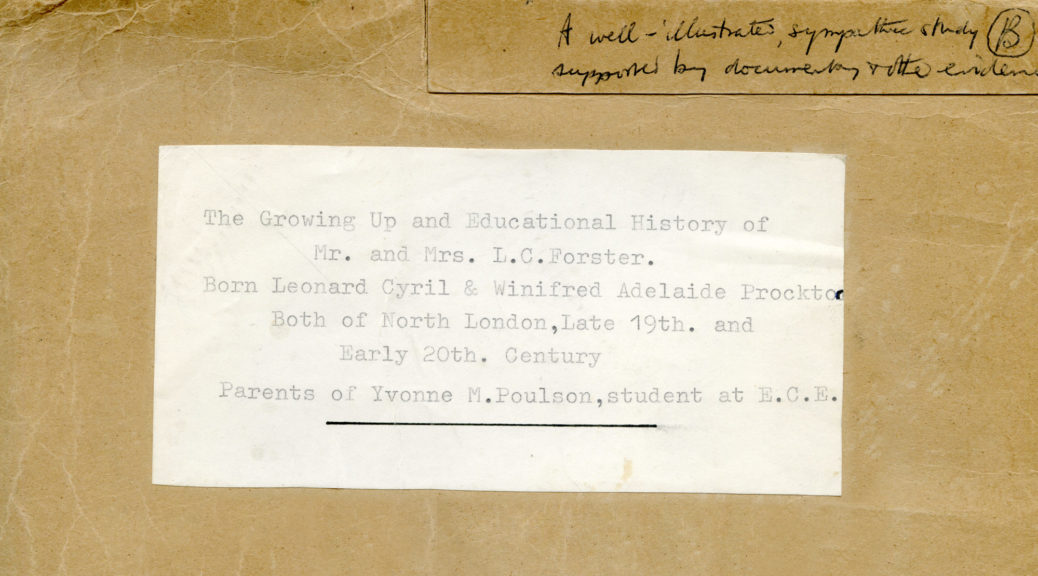
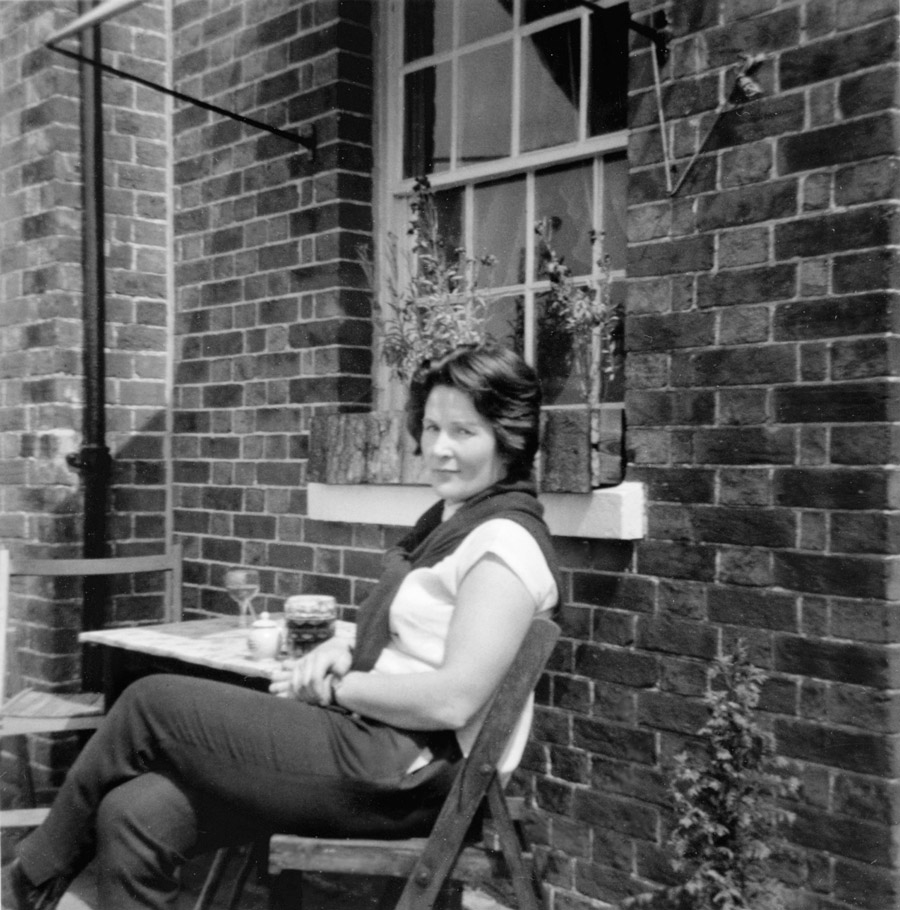
My mother, Yvonne Mary Poulson (née Forster), attended Teacher Training College at Eastbourne College of Education from 1966 to 1968, intending to become a school teacher. She didn’t finish the training – she said managing classroom discipline as a teacher walking with two sticks (or in a wheelchair, which she sometimes used) was impossible for her. As part of the course she completed a social history of her parents. Amazingly – given the number of moves and other upheaval that followed – it didn’t get lost or tossed, and I have inherited it.
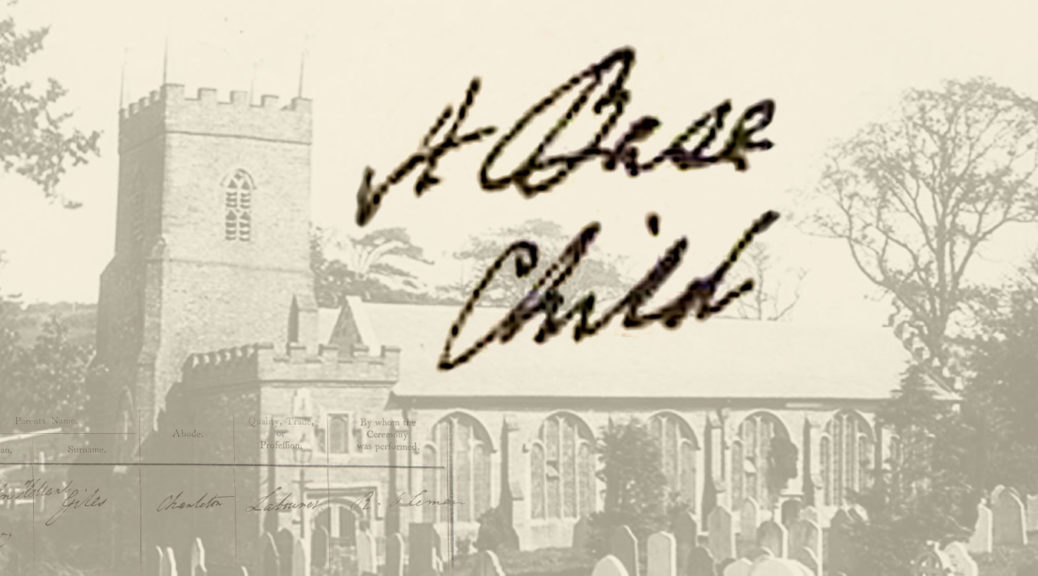
What a terrible phrase: “A Base Child”. I looked it up to be sure, but it meant what I thought it did – a child born out of wedlock. People use phrases like “born on the wrong side of the blanket” in conversation, but to see the parish curate or vicar write something in the register seemed extraordinarily harsh, especially as the “sin” wasn’t the child’s.
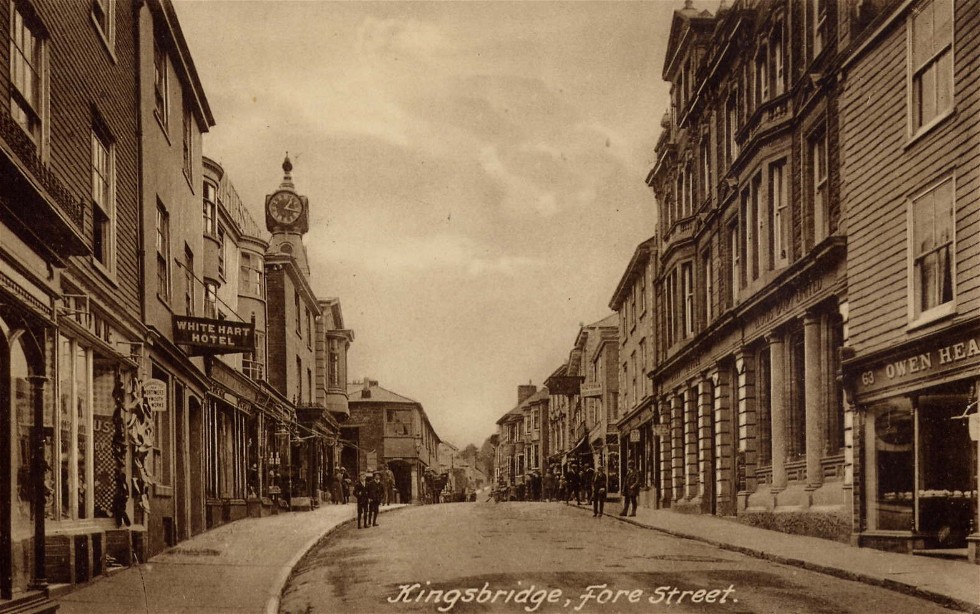
My maternal great-grandmother’s immediate family lived in London, but her parents were both born and brought up in Devon in the Kingsbridge area and have roots going back several generations in Dodbrooke, Charleton and Stoke-Damarel.
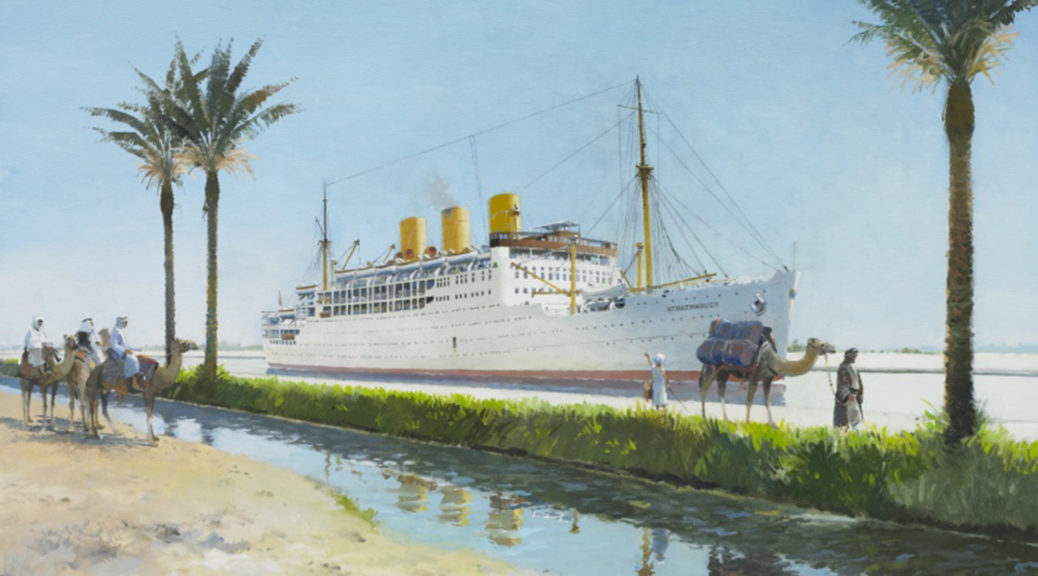
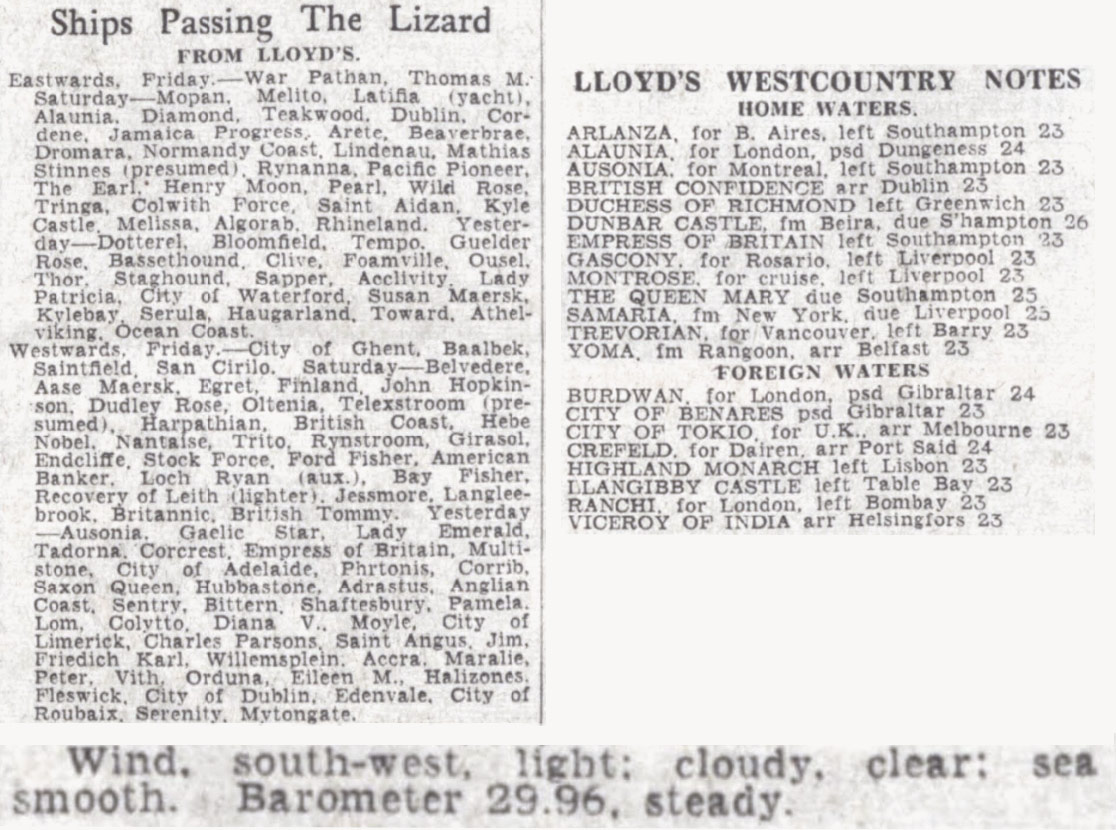
Passenger liners were regularly criss-crossing the globe in the early 20th century – the British Empire on which the sun never set was still very much a thing. When you traveled from India to London or Australia to London, you didn’t go directly, either “calling” at a port to transfer mail and goods, or staying a couple of days before continuing the journey.
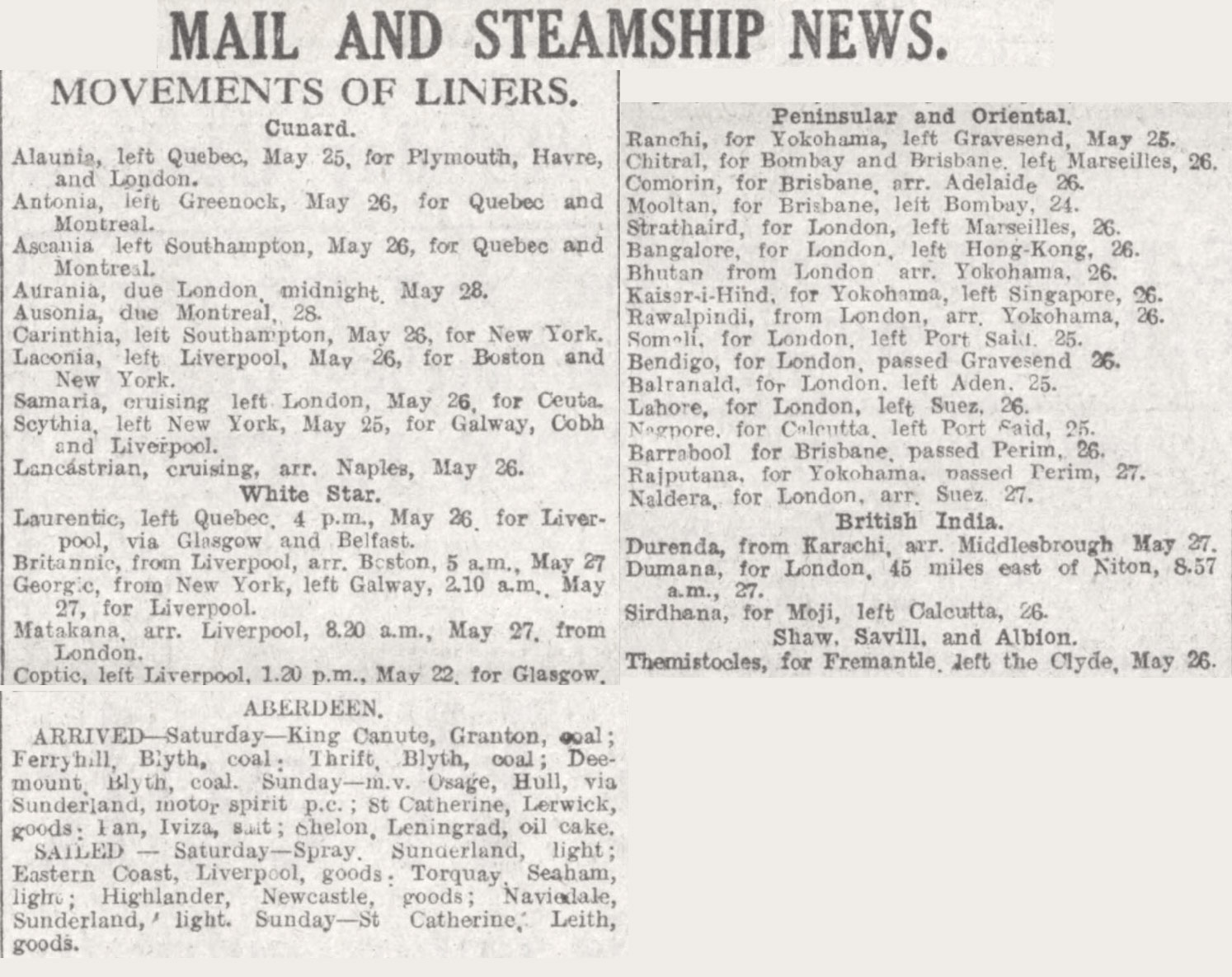
I started looking at newspaper accounts of voyages when I wanted to know a departure date – passenger lists had the arrival date and the port at which a passenger boarded, but not dates. What I saw was daily coverage of the movements of mail ships, liners and other traffic in newspapers around the UK – not just in the port cities.
Passing the Lizard
These lists stopped around the start of WWIII and were irrelevant thereafter, but provided fascinating insight into both getting or sending a letter or package then, plus the role of local newspapers for practical aspects of daily life, not just politics, sports and “celebrities”.
This world had its own lovely terminology – such as a headline “Ships Passing the Lizard” – and the tables with last times for mailing (to catch an outgoing ship) were massive matrices of places and routes.
Searching the 1939 register to find John Walden Poulson – the Wastrel – I located him in Brighton – a place we have no family connections (that I know of). “Elm Grove Home (temporary)” was noted by the street addresses on Vernon Terrace were I found the Wastrel’s name.
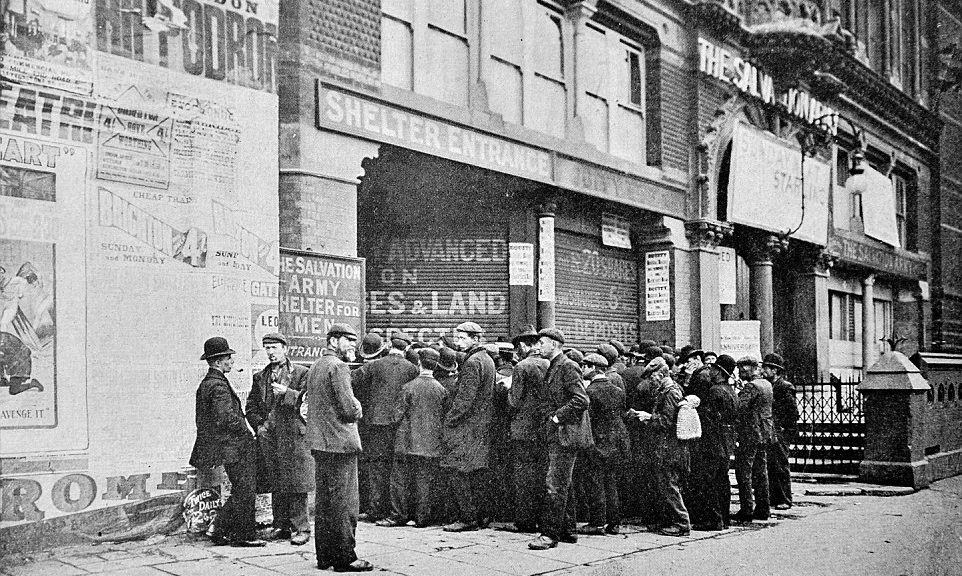
A little digging in old newspapers and web searches revealed that in 1930 The Brighton Poor Law Union handed over responsibility to the local council and only the elderly and infirm remained in the Elm Grove Home. In 1935, The Brighton Municipal Hospital took over the workhouse building and the Elm Grove Home residents were moved to vacant properties in the area. The era of workhouses and Poor Law Unions was ending.